Make a donation
Spain topographic maps
Click on a map to view its topography, its elevation and its terrain.

San Fulgencio
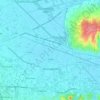
Spain > Valencian Community > el Baix Segura / La Vega Baja del Segura
Average elevation: 8 m
Make a donation
Marbella
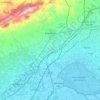
Spain > Andalusia > Costa del Sol Occidental
There are five geomorphological units: the Sierra Blanca, the Sierra Blanca piedmont (foothills), the lower hill country, the plains and the coastal dunes. The Sierra Blanca is most centrally located in the province, looming over the old village. This mountain range has three peaks: La Concha, located further…
Average elevation: 216 m
Make a donation
Granada
Spain > Andalusia > Comarca de la Vega de Granada
Granada (/ɡrəˈnɑːdə/ grə-NAH-də; Spanish: [ɡɾaˈnaða], locally [ɡɾaˈna]) is the capital city of the province of Granada, in the autonomous community of Andalusia, Spain. Granada is located at the foot of the Sierra Nevada mountains, at the confluence of four rivers, the Darro, the Genil, the…
Average elevation: 829 m
Make a donation
Balearic Islands
Located in the west of the Mediterranean Sea, the Balearic Islands have mostly typical hot-summer Mediterranean climates (Köppen: Csa) with some high altitude areas having a Warm-summer Mediterranean climate (Köppen: Csb) in the island of Majorca. The semi-arid climate (Köppen: BSh and BSk) is also found in…
Average elevation: 9 m
Make a donation
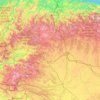
León
As for the temperatures, in general it is a cold climate due to the altitude and the abundance of frost (which persist from November to May), being more intense in the mountainous areas reaching -18 °C. Vega de Liordes, an enclave in the León sector of Picos de Europa belonging to the municipality of Posada…
Average elevation: 913 m
Make a donation
Navarre
Despite its relatively small size, Navarre features stark contrasts in geography, from the Pyrenees mountain range that dominates the territory to the plains of the Ebro river valley in the south. The highest point in Navarre is Mesa de los Tres Reyes, with an elevation of 2,428 metres (7,965 feet).
Average elevation: 629 m
Castile and León
The morphology of Castile and León consists, for the most part, of the northern half of the Meseta Central (Meseta Norte) and a belt of mountainous reliefs. The Meseta Central is a high plateau with an average altitude close to 800 m (2,600 ft) above sea-level; it is covered by deposited clay materials that…
Average elevation: 788 m
Valencian Community
The warm-summer Mediterranean climate (Köppen Csb), humid subtropical climate (Köppen Cfa), oceanic climate (Köppen Cfb) and the desertic climate (Köppen BWh) are also found in the Valencian Community. The Csb climate is more common and is found in inland, high altitude areas (generally starting above…
Average elevation: 550 m
Basque Country
The Basque Country region is dominated by a warm, humid and wet oceanic climate. The coastal area is part of Green Spain and by extension, the climate is similar for Bayonne and Biarritz as well. Inland areas in Navarre and the southern regions of the autonomous community are transitional, with continental…
Average elevation: 560 m
Make a donation

Canary Islands
The Canary Islands, especially Tenerife, Gran Canaria, Fuerteventura, and Lanzarote, are a major tourist destination, with over 12 million visitors per year. This is due to their beaches, subtropical climate, and important natural attractions, especially Maspalomas in Gran Canaria and Mount Teide (a World…
Average elevation: 13 m